

+91-9240214610 (Bandra)
+91-9240214611 (Kandivali)






Have you noticed more children wearing glasses these days? Perhaps your child has started sitting closer to the television, squinting to see the classroom board or holding a book unusually close. Myopia, commonly known as short-sightedness, is becoming more common among children. And it’s a big concern many parents have. Children’s daily routines have changed. They spend more time doing close-up work, less time outdoors and some may also have a family tendency towards myopia.
Read More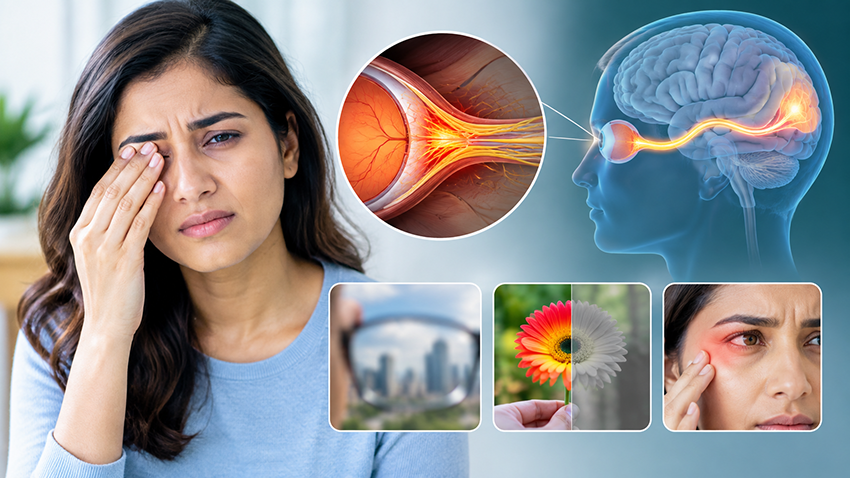
Changes in your vision can be worrisome, particularly if they occur suddenly. If you experience any of these symptoms, don’t ignore them: one eye becomes blurred, colors seem duller or you feel pain when moving your eye. It might be something called optic neuritis, which is an inflammation of the optic nerve. The optic nerve is like a communication pathway for your eye and the brain, it carries information that allows you to see.
Read More
With screens becoming a regular part of our daily lives, tired and uncomfortable eyes have become very common. Whether you work on a computer, spend hours on your phone or regularly do close-up work, you may have experienced eye fatigue, dryness or blurred vision. This is where eye exercises and eye yoga are often suggested as simple ways to relax the eyes.
Read More
Children’s eyes are constantly growing and developing. That is why eye care during childhood is so important. A child may not always realise that their vision is not clear and some eye problems may not show obvious symptoms in the beginning. Good eye habits, regular eye check-ups and paying attention to changes in your child’s vision can help them with healthy eyesight.
Read More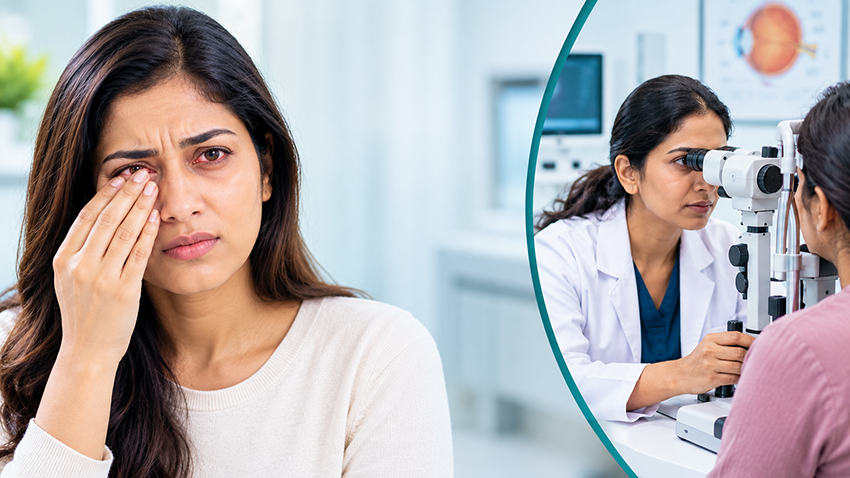
Red eyes are common and can happen to anyone. Sometimes the reason is as simple as tired or dry eyes. At other times, redness may be linked to an infection, allergy or another eye problem. So, when should you actually see a doctor? In many mild cases, the redness settles on its own. But if it continues or comes with other symptoms, it is better not to ignore it. If you can recognize the warning signs you can get the right treatment at the right time.
Read More
For sportsperson and people who just lead an active lifestyle, glasses and contact lenses can sometimes feel like a hindrance. Eyeglasses can fall off when you exercise and contact lenses can be inconvenient for sports, swimming or outdoor activities. That’s why laser eye treatment can be an attractive option. But if you play contact sports, swim regularly or train intensely, you may naturally start thinking.
Read More
Artificial intelligence or AI, has come out of the tech news channels and entered our lives. And it’s also slowly becoming part of healthcare, including eye care. Ophthalmology is using AI to analyze eye scans, to help screen for diseases and to help doctors spot changes which are not always easy to see. This can be particularly useful in eye conditions where early detection and regular monitoring is important.
Read MoreMost people experience eye discharge at some point, and it’s usually not a cause for concern.Your eyes naturally produce tears and mucus to stay clean and remove dust, old cells and other debris. However, if you suddenly notice more eye discharge than usual or it becomes thick, sticky, yellow or green, it may be a sign that something needs to be taken care of. Eye discharge can occur due to infections, allergies, dry eyes, irritation or other eye conditions.
Read MoreEye makeup can enhance your look, but old or contaminated products can harm your eye health. Mascara, eyeliner and other eye cosmetics can collect bacteria over time, especially because their brushes and applicators repeatedly come into contact with your lashes and eyelids. The problem is that an old product may still look perfectly normal. You may not notice anything wrong with it until your eyes start becoming red, itchy or irritated.
Read MoreAfter retina surgery, you may focus mainly on your medicines, eye drops and rest. But the way you position your head can also be an important part of your recovery. If your retinal surgeon has asked you to keep your head in a particular position, it is not simply a precaution. In certain retinal procedures, especially when a gas bubble is placed inside the eye, the correct head position helps the bubble stay against the area of the retina that needs support.
Read MoreHave you ever thought, what happens when the inner surface of the eyelid sticks to the surface of the eye? This condition is called symblepharon. It usually happens because of severe inflammation, injury or scarring of the conjunctiva. Symblepharon can be mild and cause little discomfort, but more extensive adhesions may affect eyelid movement, eye movement and even vision. Early diagnosis and appropriate treatment can help manage the condition.
Read MorePosterior Capsular Opacification (PCO), sometimes called a “secondary cataract,” is a common problem that can develop after cataract surgery. It may cause vision to become blurry or cloudy again, sometimes months or even years after surgery. PCO is not a return of the cataract. Instead, the thin capsule behind the artificial lens becomes cloudy, affecting clear vision. PCO can usually be effectively treated with a simple laser procedure.
Read MoreHave you ever noticed tiny black dots, spots, lines or cobweb-like shapes moving across your vision? You may notice them more clearly while looking at a blue sky, a white wall or a computer screen. When you try to look directly at one or you blink, they may seem to move away. These are commonly known as eye floaters. In many cases, they are harmless and happen because of natural changes in the jelly-like.
Read MoreNoticing a brown spot on your eye while looking in the mirror can definitely make you worried. And you may wonder whether it is just a harmless eye freckle or something that needs medical attention. In most cases, a brown spot on the eye is harmless and is caused by a collection of pigment-producing cells. These spots may appear on the white part of the eye, the clear surface covering it, or the coloured part called the iris.
Read More
Vision is highly dependent on a healthy diet providing key nutrients such as vitamin A, antioxidants (vitamin C and E), and omega-3 fatty acids that protect eye tissues and help keep cells functioning well over time. Food can’t fix refractive errors such as nearsightedness (myopia) or make the need for corrective lenses go away. But eating well can go a long way in reducing your risk of major eye diseases.
Read More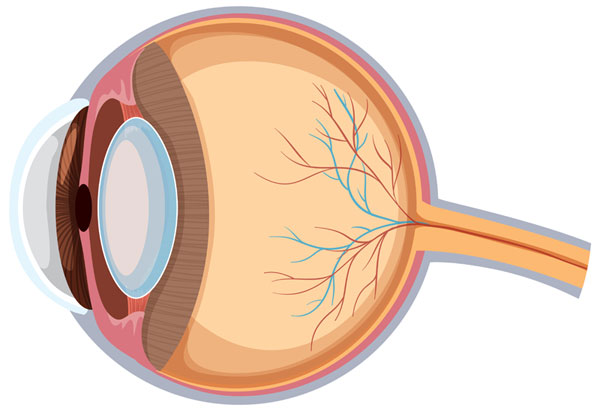
Intraocular pressure (IOP) is the fluid pressure in the eye. Typically, it is measured in millimeters of mercury (mmHg). A normal, healthy range is typically between 10 and 21 mmHg. Normal intraocular pressure (IOP) is important to vision as it protects the optic nerve, keeps the structural shape of the eye, and allows healthy fluid balance.
Read More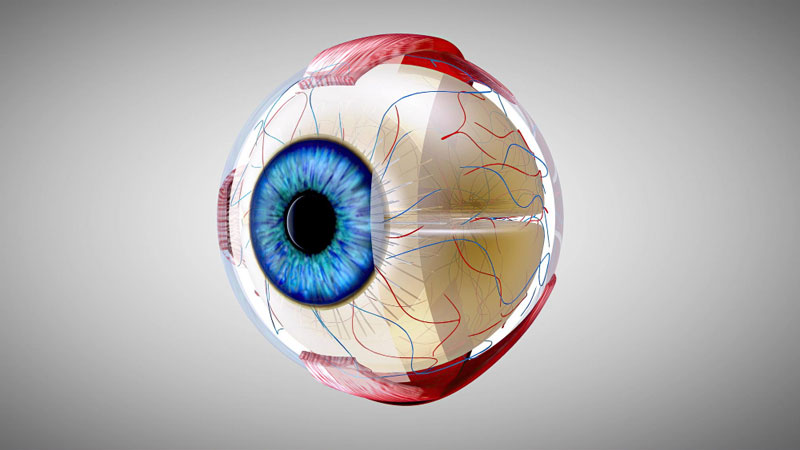
Cataract surgery is the removal of the cloudy eye lens and replacing it with a clear intraocular lens. Ophthalmologists perform cataract surgery aiming at clear vision. However, eye conditions such as Fuchs dystrophy and astigmatism severely complicate the surgical outcomes. Although cataract surgery is one of the safest and most successful procedures.
Read More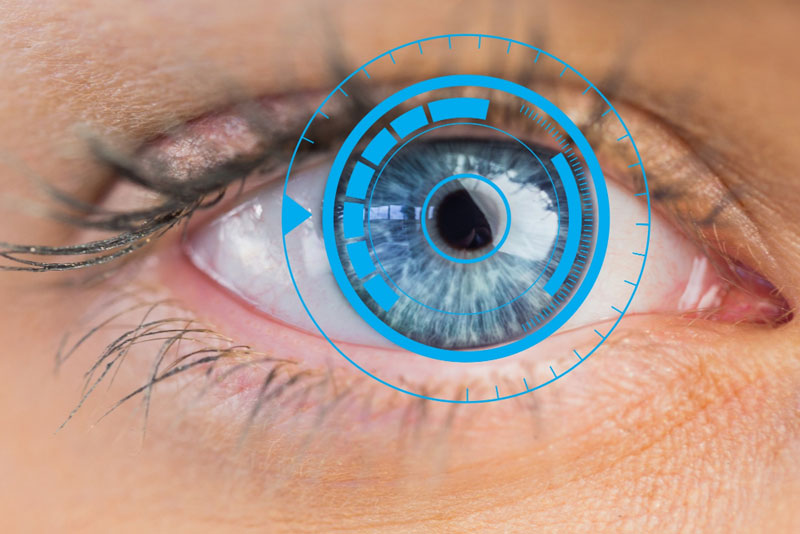
Fuchs’ endothelial dystrophy is a major indication for corneal transplantation. It is a progressive, inherited eye disease where the inner cell layer of the cornea (the endothelium) slowly dies off. Many patients aren’t diagnosed until the condition becomes quite advanced. These endothelial cells normally pump fluid out of the cornea. When they fail, fluid builds up.
Read More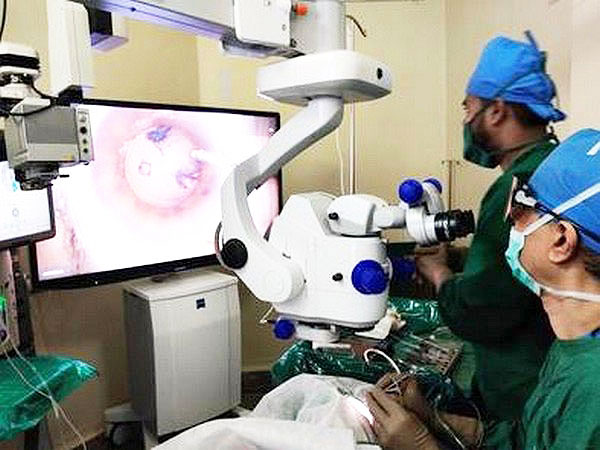
Many patients are worried about the safety of flying after eye surgery. There is a considerable change in pressure, exposure to dry air, and disturbance in the recovery period during air travel. Most eye surgeries permit you to travel afterwards, but the timeframe depends on the kind of surgery and how the patient recovers. Flying too soon after eye surgery can affect your healing.
Read More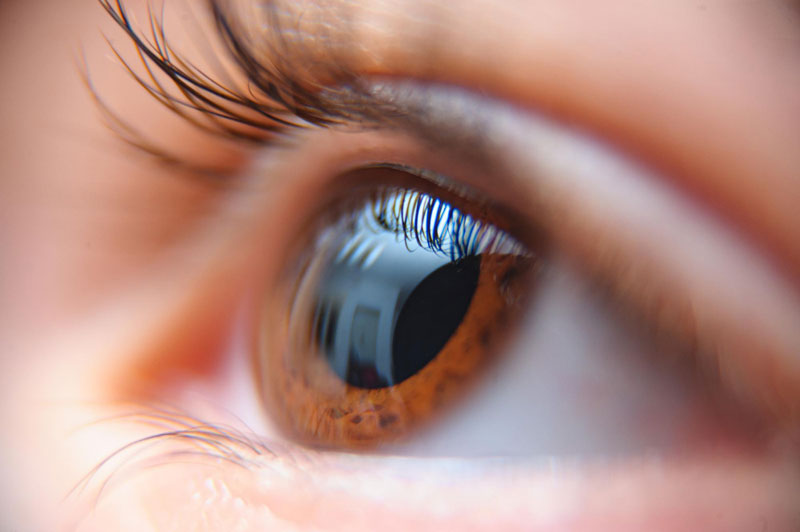
Corneal Allogenic Intrastromal Ring Segments is abbreviated as CAIRS. It is a minimally invasive eye surgery for keratoconus, pellucid marginal degeneration, and post-LASIK ectasia where small, arc-shaped pieces of human donor corneal tissue are inserted into channels in the middle layer of the patient’s cornea to flatten and reshape the bulge.
Read More
While cataracts and dry eyes themselves are not life-threatening, untreated cases can significantly impair vision and the overall quality of life. Cataracts develop when the lens of the eye loses its clarity, becoming cloudy and opaque. As a result, vision is affected, often causing blurriness and a dulling of colors. These changes can significantly impact daily activities, making tasks more challenging to perform.
Read More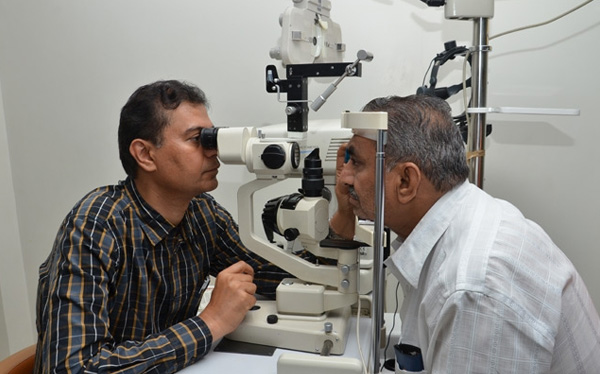
Presbyopia is an old age condition found in almost all the elderly. In this condition, the ability of the lens to focus on the near objects gets reduced. Various treatment options such as glasses, contact lenses, and surgery are available. If you want to under a laser eye surgery in Mumbai, opt for the best ophthalmologist in Mumbai.
Read More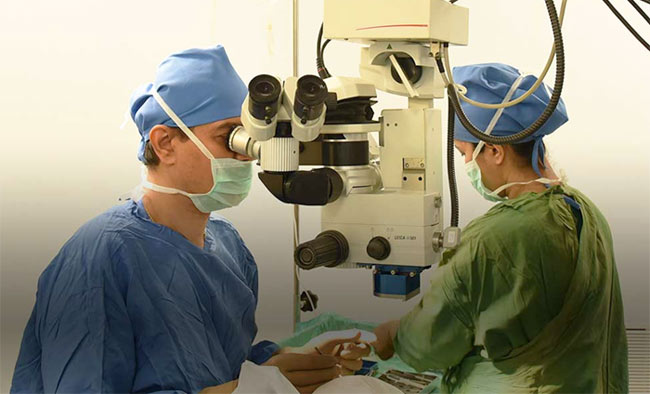
Artificial iris implants are particularly used for both cosmetic and therapeutic purposes. In many cases, the iris implants simultaneously perform both the functions. Artificial iris anterior chamber implants were initially used for therapeutic purposes. However, in recent times, many people opt for artificial iris anterior chamber implants for cosmetic purposes, for instance.
Read More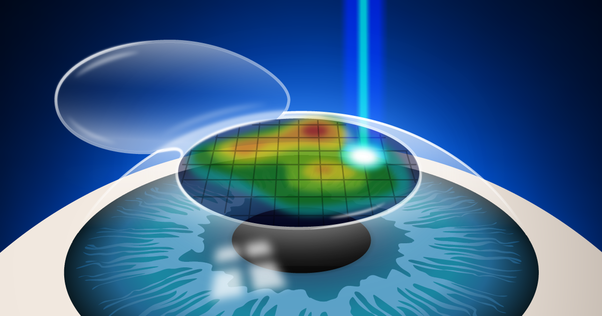
With the advancement in technology in eye surgery, the surgical procedure becomes highly sophisticated with minimum complications. Contoura Vision is one such surgical procedure that is technically advanced and provides much accurate results as compared to normal laser surgery. In Contoura vision surgery, the cornea is divided into various elevation points through corneal mapping.
Read More
Abstract Purpose: To assess the effectiveness and tolerability of GenTeal® gel in post-menopausal patients with moderate to severe dry eye. Methods: This was an open label, multicenter, non-comparative, non-interventional, observational study in post-menopausal women patients of age 39-82 years with moderate to severe dry eye. The patients were treated with GenTeal® gel for 20 weeks
Read More
